A Panerai Luminor can look perfectly balanced in a front-facing photograph, then feel completely different once the crown guard reaches the outer edge of the wrist. That is the real issue behind a luminor 44mm vs 47mm replica comparison.
Three millimeters sounds minor on paper. However, a Luminor does not wear like a simple round watch. Its cushion-shaped case, broad bezel, thick strap and crown-protection bridge create a much wider visual footprint than the diameter alone suggests.
The 44mm size is the stronger all-round option for regular wear. Meanwhile, 47mm works best when oversized proportions, a broad dial and unmistakable wrist presence are the main reasons for choosing the watch.
Quick Verdict: 44mm Wins for Most Wearing Routines
For most wrists and most schedules, 44mm is the more convincing decision. It already delivers the broad dial, muscular cushion case and oversized crown bridge that define the Luminor silhouette. Even so, it remains manageable during a commute, an eight-hour desk day or a casual dinner.
The 47mm size is more specialised. It brings a wider dial opening, stronger case presence and a more deliberate instrument-watch character. That extra impact works best on a broad, flat wrist or in a collection that already contains smaller watches.
Choose 44mm when versatility matters
The case still looks unmistakably large, yet it creates fewer problems with shirt cuffs, laptop edges and long wearing sessions. It is also the safer starting point when the Luminor shape has never been worn before.
- Regular office and travel rotation
- Medium or moderately flat wrists
- Mixed smart-casual and weekend clothing
Choose 47mm when the size is the point
A 47mm Luminor should look large. The broader dial, heavier visual footprint and wider strap produce a watch that takes control of the outfit rather than quietly completing it.
- Broad wrists and relaxed clothing
- Weekend or collection-focused use
- Strong wrist shots and heritage proportions
The Main Decision
Luminor 44mm vs 47mm Replica: The Differences That Matter
A useful comparison cannot stop at case diameter. The shape of the case, dial opening, crystal profile, crown bridge, strap width and material all change how the watch sits during normal movement.
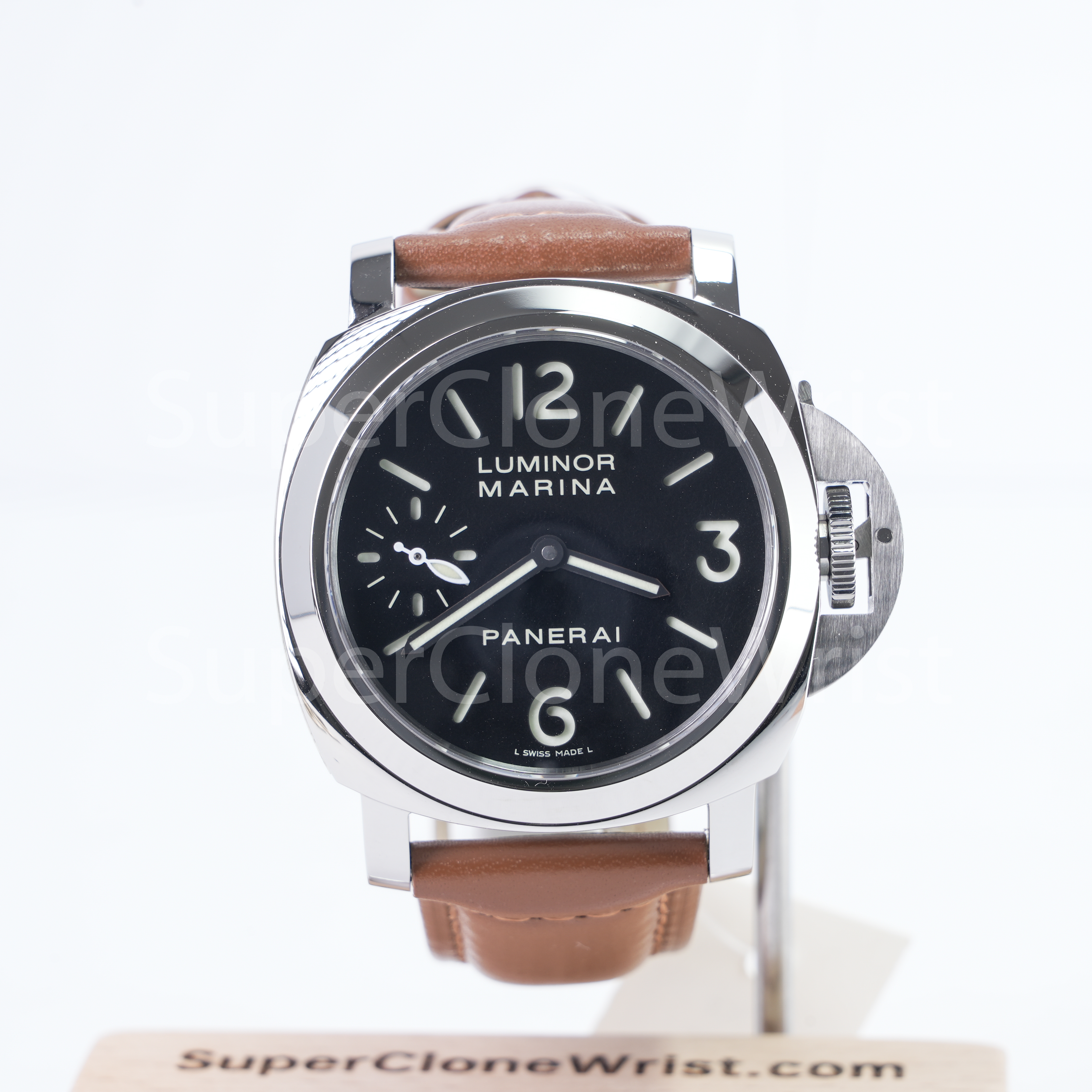
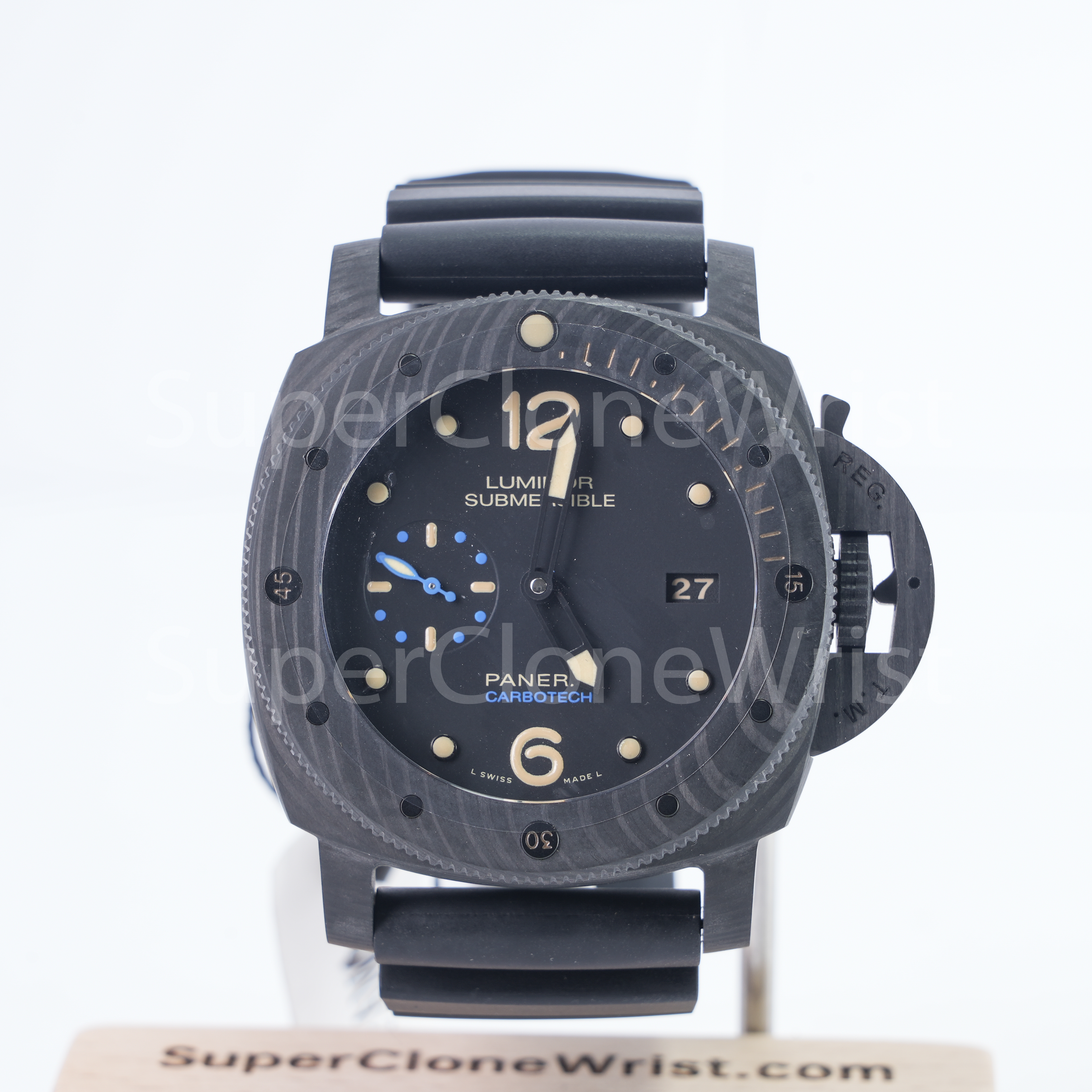
Also, 44mm and 47mm references do not always share the same bezel, movement or function layout. A Marina, a GMT and a Submersible may all wear differently even when the listed diameter matches. Size provides the first direction, while the exact reference settles the final fit.
At-a-glance comparison
The table below separates general size behaviour from reference-specific features. A 47mm Marina without a dive bezel may look cleaner than the sport example above, while a thick 44mm case can feel heavier than expected.
| Comparison Point | 44mm Luminor | 47mm Luminor | Practical Judgment |
|---|---|---|---|
| Visual presence | Bold, wide and immediately recognisable | Dominant, oversized and deliberately dramatic | 44mm is already a statement size |
| Wrist footprint | More likely to leave visible wrist around the case | Can cover most of the flat upper wrist | Wrist width matters more than circumference alone |
| Daily comfort | Better for long desk, travel and driving sessions | More likely to shift or press against the hand | 44mm wins for ten-hour wear |
| Dial appearance | Compact, dense and purposeful | Open, spacious and more theatrical | 47mm emphasises sandwich-dial depth |
| Sleeve clearance | Manageable with open or relaxed cuffs | Often remains outside a fitted cuff | Neither size is a traditional dress-watch fit |
| Collection role | Regular rotation or main Panerai-style watch | Weekend statement or contrasting collection piece | Purpose should decide the size |
| Overall verdict | The safer and more useful choice | The more memorable and specialised choice | Uncertain cases should default to 44mm |
Three millimeters becomes more than three millimeters
The crown bridge adds a block of visual width on the right side. At the same time, the cushion case fills more wrist surface than a conventional round case, so 47mm grows in every direction rather than only across the dial.
From one meter away, 44mm looks like a large watch. In contrast, 47mm looks like an intentionally oversized instrument.
Reference construction matters as much as diameter
A domed crystal, automatic movement, display back or dive bezel can add height. Therefore, a side-profile QC photograph says more about cuff clearance than a front photograph or model title.
The useful image shows bezel, crystal, middle case, case back and the angle at which the strap leaves the lugs.
The larger dial exposes both strengths and flaws
A 47mm dial gives the numerals, hands and small-seconds display more room. However, the same open space makes short hands, weak printing or an undersized subdial easier to notice.
The tighter 44mm layout can look more cohesive when the execution is good but not exceptional.
Bezel and crystal character
A polished smooth bezel gives a Luminor Marina a cleaner appearance. Under warm restaurant lighting, the polished edge catches light while the brushed case remains quieter. That contrast can make a 44mm watch feel refined without reducing its tool-watch character.
A rotating dive bezel changes the equation. It adds markings, extra height and visual weight around the dial. Consequently, a 47mm Submersible often feels larger than a similarly sized clean-bezel Luminor, even before case material and strap thickness enter the comparison.
Crystal shape matters as well. A flatter crystal creates a more modern, compact profile. Meanwhile, a pronounced dome introduces curved reflections and a vintage mood, although it may catch sleeves and desk edges more often.
Functions do not belong to one size
Case diameter does not determine the movement or dial functions. Both size groups can appear with simple hours and minutes, small seconds, date displays, GMT hands, power-reserve indicators or automatic movements.
A clean manual-wind layout suits the traditional Luminor character. The daily winding action takes less than a minute, while the uncluttered dial leaves fewer details to inspect. For a regular travel schedule, however, a functional date or GMT display may offer more practical value.
Added functions should earn their place. A decorative GMT hand or unreliable power-reserve display offers less value than a simple movement with clean setting action and stable daily operation.
Fit Before Diameter
Wrist Size, Wrist Shape and Strap Drop
Wrist circumference gives a starting point, but the flat upper-wrist width provides the more useful measurement. A flat 6.75-inch wrist can support a broad case better than a rounded 7-inch wrist because more surface sits directly beneath the lugs.
The strap should begin wrapping soon after it leaves the case. When the lugs extend beyond the usable wrist surface, the strap drops sharply and the watch looks strapped across the arm rather than seated on it.
For a second reference point, the watch size and wrist-fit guide explains how diameter, lug position and case thickness work together.
Two-Minute Fit Check
Measure more than circumference
- Measure around the wrist at the usual watch position.
- Measure the flat upper surface from edge to edge.
- Cut paper shapes measuring 44mm and 47mm across.
- Add a small block on the right for the crown guard.
- Check the result in a mirror from one meter away.
Close-range phone cameras can exaggerate size. A standing-distance mirror view gives a more realistic impression.
44mm is already a strong statement
A short, soft strap can make 44mm workable, especially on a flat wrist. Even so, the crown guard will occupy a large part of the visible width.
At 47mm, the intentionally oversized look becomes extreme rather than merely bold.
The natural 44mm range
This range often gives 44mm enough space to look large without forcing the strap downward. A 47mm case can still work when the wrist is wide and a dramatic result is intentional.
For uncertain cases, a side photograph should decide the matter.
Both sizes become realistic
The 44mm case looks controlled and versatile. Meanwhile, 47mm begins to appear proportionate rather than oversized by accident.
Choice should shift toward daily use versus collection use at this point.
47mm reaches its natural setting
A broad upper wrist allows the case and strap to settle with fewer sharp angles. The watch remains large, but the crown bridge no longer controls the entire silhouette.
The 44mm size still works when a cleaner and lighter result is preferred.
Strap length can rescue or ruin the fit
A correctly sized strap keeps the buckle near the centre of the underside of the wrist. That position spreads pressure evenly during typing, driving and walking. In contrast, a buckle sitting near the wrist edge can make a heavy case rotate outward every few minutes.
Stiff leather also changes the first impression. During the first few wears, a thick strap may hold the case above the wrist and create visible gaps near the lugs. Softer leather settles sooner, while rubber usually wraps immediately but can feel warmer after an hour outdoors.
Therefore, the luminor 44mm vs 47mm replica decision should include strap length, material and hole position rather than ending at the case number.
Daily Wear, Collection Use and Clothing Pairings
A product photograph shows the watch at its best angle. Daily life adds cuffs, desks, steering wheels, luggage handles and several hours of movement. Those ordinary details reveal which size actually belongs in the rotation.
The clearest rule is simple: daily wear rewards control, while collection use can reward excess. The 44mm size handles more environments. The 47mm size creates a more memorable experience in fewer environments.
44mm keeps the Luminor character under control
At a desk, the underside buckle and case edge contact hard surfaces repeatedly. A 44mm case reduces those small collisions and is less likely to catch a jacket sleeve during a meeting.
A black dial with dark-brown leather works well beside grey trousers, an overshirt or relaxed tailoring. A tightly fitted dress cuff remains a poor match for either size.
47mm makes sense with texture and weight
Heavy denim, leather, canvas and thick knitwear give the larger case a visual base. During a Saturday afternoon, the watch can remain outside the cuff without looking misplaced.
A wide vintage-style strap with visible stitching strengthens the historical instrument look. Thin formal leather usually looks too delicate beside the 47mm case.
44mm handles airports and long sitting periods better
A long flight or train journey exposes wrist pressure quickly. The smaller footprint sits more calmly beneath a light jacket and occupies less space in a compact watch pouch.
For travel-focused use, a functional date or GMT may be worth the extra dial activity. The adjustment sequence should appear in one continuous QC video.
47mm fills a wrist shot with less effort
The broad dial, thick strap and crown bridge create a clear silhouette in close photographs. Reflections across a domed crystal can also add depth when the wrist rotates slowly under window light.
However, close phone lenses exaggerate scale. A normal-distance image remains necessary before judging real-world balance.
44mm on rubber is the easier summer setup
Rubber handles sweat and brief rain more easily than thick leather. The 44mm case also leaves slightly more open wrist area, which matters during a humid afternoon outdoors.
A 47mm rubber setup looks more tactical and modern. Even so, the broad contact area can feel warm after continuous wear.
47mm brings contrast to smaller watches
A collection filled with 39mm to 42mm cases gains a genuinely different mood from a 47mm Luminor. That contrast can justify a watch that appears only twice each month.
When one Panerai-style watch must cover most situations, the 44mm size remains the better answer.
Who Should Choose Which?
A Clear Recommendation by Priority
The final decision becomes easier once one priority takes control. Trying to make both sizes equally suitable for every situation only creates a vague answer.
Comfort, flexibility and regular rotation
- The watch may remain on the wrist for eight to twelve hours.
- Office, travel and weekend clothing all matter.
- The wrist is medium-sized or slightly rounded.
- This will be the first Luminor-shaped watch.
- A clean date, GMT or small-seconds layout is preferred.
The 44mm Luminor selection is the practical place to begin when several references remain under consideration.
Historical scale, collection contrast and impact
- The wrist has enough flat surface for the full case.
- The collection already includes smaller daily watches.
- Heavy leather, rubber and casual clothing appear often.
- The watch is intended to look oversized rather than discreet.
- Wrist photography and visual presence matter strongly.
The 47mm Luminor selection makes more sense when large proportions are part of the original plan.
QC Checks, Version Advice, Packaging and Shipping
The correct size cannot compensate for a poorly shaped case, weak crown guard or misaligned dial. Therefore, the selected reference should move through a structured visual check before dispatch.
The site’s QC photo process provides the broader framework. For a Luminor, the crown bridge, case profile, dial scale and strap attachment deserve extra attention.
Check the silhouette before small details
- Confirm the actual diameter without including the crown guard.
- Request a straight side photograph showing total height.
- Inspect brushing and polishing transitions near the bezel.
- Check that the crown lever closes evenly without a large gap.
- Look for a strap that leaves both lugs at matching angles.
Open dials make spacing errors easy to see
- Inspect numeral shape, spacing and lume fill.
- Confirm that the minute hand reaches the correct track area.
- Check the small-seconds hand and subdial centring.
- Review date alignment on more than one displayed number.
- Request a dark image for basic lume consistency.
Watch one continuous function video
- Open and close the crown lever on camera.
- Show winding and time-setting action without a cut.
- Demonstrate date, GMT or power-reserve operation when present.
- Listen for obvious scraping or an unusually loud rotor.
- Confirm the exact movement option before final approval.
The most useful photo and video request
One front photograph is not enough for a luminor 44mm vs 47mm replica decision. A useful set contains the straight dial, both case sides, crown guard open and closed, case back, strap, buckle and a measured wrist shot.
A same-wrist comparison is especially valuable. Both watches should appear under similar lighting, at the same camera distance and from the same angle. Otherwise, perspective may create a larger apparent difference than the watches themselves.
A slowly rotating wrist video reveals balance. When the case leans outward or slides toward the hand during one simple turn, the fit may become tiring during a full day.
Version Priorities
Spend Attention on the Details Seen Every Day
The highest-priced version is not automatically the most suitable version. A premium movement decoration offers little benefit when the watch is uncomfortable, the crown guard sits unevenly or the strap closes on the wrong hole.
A better order of priorities keeps the decision practical:
- Correct size and stable wrist balance
- Accurate cushion-case shape and crown bridge
- Clean dial printing, numerals, hands and lume
- Suitable strap length and comfortable buckle position
- Stable movement and correctly working functions
- Movement decoration and presentation packaging
When several factory options exist, the factory version guide helps organise the comparison around the exact reference instead of relying on one factory name for every model.
Packaging and delivery details to confirm
A broad 47mm case and large buckle need enough separation inside the package. The watch head should not move freely against the strap hardware during transit. Compact watch-only packaging and a full presentation set also create different parcel sizes and delivery arrangements.
Before dispatch, confirm the exact reference, size, strap colour, strap length, approved QC set, packaging option and destination details in one message thread. That record prevents confusion when several versions have been discussed.
Delivery timing can change with stock preparation, route, carrier handoff and customs processing. The shipping and delivery guide explains the normal sequence without treating an estimate as an exact promise.
After tracking begins, the QC photographs and order conversation should remain saved. They provide a simple reference for the approved watch, strap and packaging configuration.
The 44mm Is the Better Default; the 47mm Is the Better Statement
The 44mm Luminor is the clear recommendation for a regular rotation. It preserves the broad dial, cushion case, thick strap and signature crown bridge while remaining more practical at a desk, during travel and under relaxed outerwear.
The 47mm version serves a narrower purpose, but it performs that purpose well. Its open dial and oversized case create a stronger heritage-inspired mood, particularly on a broad wrist with denim, leather, canvas or heavy knitwear.
When doubt remains after a luminor 44mm vs 47mm replica comparison, the 44mm size is the sensible answer. It is not small or restrained. It is simply the version most likely to remain comfortable after the first week of excitement has passed.
Measure the flat wrist surface
Record circumference and the straight width across the top. The second figure often explains fit better than circumference alone.
Compare normal-distance wrist shots
Use the same wrist, camera distance and lighting. Add a side view to reveal lug overhang and strap drop.
Confirm the exact reference before approval
Check movement, functions, strap length, weight, QC photographs, packaging and current delivery expectations in one thread.
Luminor 44mm vs 47mm Replica FAQ
The questions below focus on practical fit, daily use and approval checks rather than treating the listed diameter as the complete answer.
Still Deciding Between 44mm and 47mm?
Request current photos, side profiles, wrist shots, weight comparisons and available version details for the exact references under consideration.
Wrist circumference, flat wrist width, preferred strap and normal wearing routine can be included in the message for a more useful size recommendation. QC photos, packaging options and current delivery expectations can also be confirmed before approval.