Near a window, the polished steel bezel changes from bright silver to charcoal as the wrist turns. The black ceramic ring stays visually fixed and keeps the dial inside a clean dark frame. That single observation explains why the daytona 116500 vs 116520 replica comparison feels much larger than a simple bezel update.
Both references carry the compact, three-register Daytona shape, an Oyster-style bracelet, screw-down controls, and a relatively slim chronograph profile. Still, they do different jobs. The 116500 suits frequent wear and modern casual clothing, while the 116520 earns its place through an all-steel appearance that feels less common in a collection filled with ceramic sports watches.
Quick verdict
Ceramic wins the weekly rotation; steel wins the watch box
For one Daytona expected to handle office hours, weekend driving, travel, dinner, and repeated wrist shots, the 116500 is the clear recommendation. Its black ceramic-style bezel frames the dial, keeps fine surface wear less visible, and makes the watch look slightly tighter on medium wrists.
The 116520 makes more sense when the collection already contains several black-bezel pieces. Its polished steel tachymeter ring joins the case and bracelet into one bright shape. Normal hairlines appear sooner, yet that softer worn-in finish gives the reference a character the ceramic model cannot copy.
Choose the 116500 when
One watch needs to cover frequent wear, casual clothing, travel, and a cleaner-looking bezel after regular desk contact.
Choose the 116520 when
The watch will rotate with other pieces, an all-steel profile matters, and ordinary hairlines are accepted as part of use.
| Decision point | Daytona 116500 replica | Daytona 116520 replica | Practical call |
|---|---|---|---|
| Bezel appearance | Black ceramic-style ring with strong contrast | Engraved polished metal ring that reflects nearby light | 116500 looks cleaner from normal distance |
| Apparent size | Dark edge visually pulls the case inward | Continuous steel surface makes the watch look broader | 116500 for compactness; 116520 for presence |
| Visible wear | Fine rubbing is usually less obvious on the bezel | Hairlines show under side light and close phone photos | 116500 for frequent use |
| White dial effect | High-contrast panda look | Brighter silver-and-white appearance | 116500 for instant recognition |
| Black dial effect | Dark, compact, strongly modern | Dark center with a bright metallic frame | 116520 for a less common combination |
| Collection role | Modern daily sports chronograph | Older-generation all-steel alternative | 116520 adds more variety |
| QC priority | Bezel color, engraving fill, dial-ring proportions | Engraving depth, polish, surface flatness | Inspect the allocated watch, not only stock photos |
The short version of the daytona 116500 vs 116520 replica decision is straightforward. The 116500 is easier to live with, easier to photograph, and easier to pair with everyday clothing. The 116520 is the more interesting addition after a modern black-bezel sports watch is already present.
The bezel changes the apparent size more than the case does
A Daytona dial contains a lot inside a compact circle: three registers, applied markers, several printed scales, central hands, and polished surrounds. The bezel acts as the outer frame. Black ceramic separates the dial from the case, while polished steel lets the dial, case, and bracelet flow into one reflective surface.
At roughly an arm’s length, the 116500 usually reads as dial first, bezel second, bracelet third. The 116520 often reads as one continuous steel object, with the dial sitting inside it. That difference remains visible in a mirror, across a restaurant table, and in an ordinary phone photo without macro zoom.
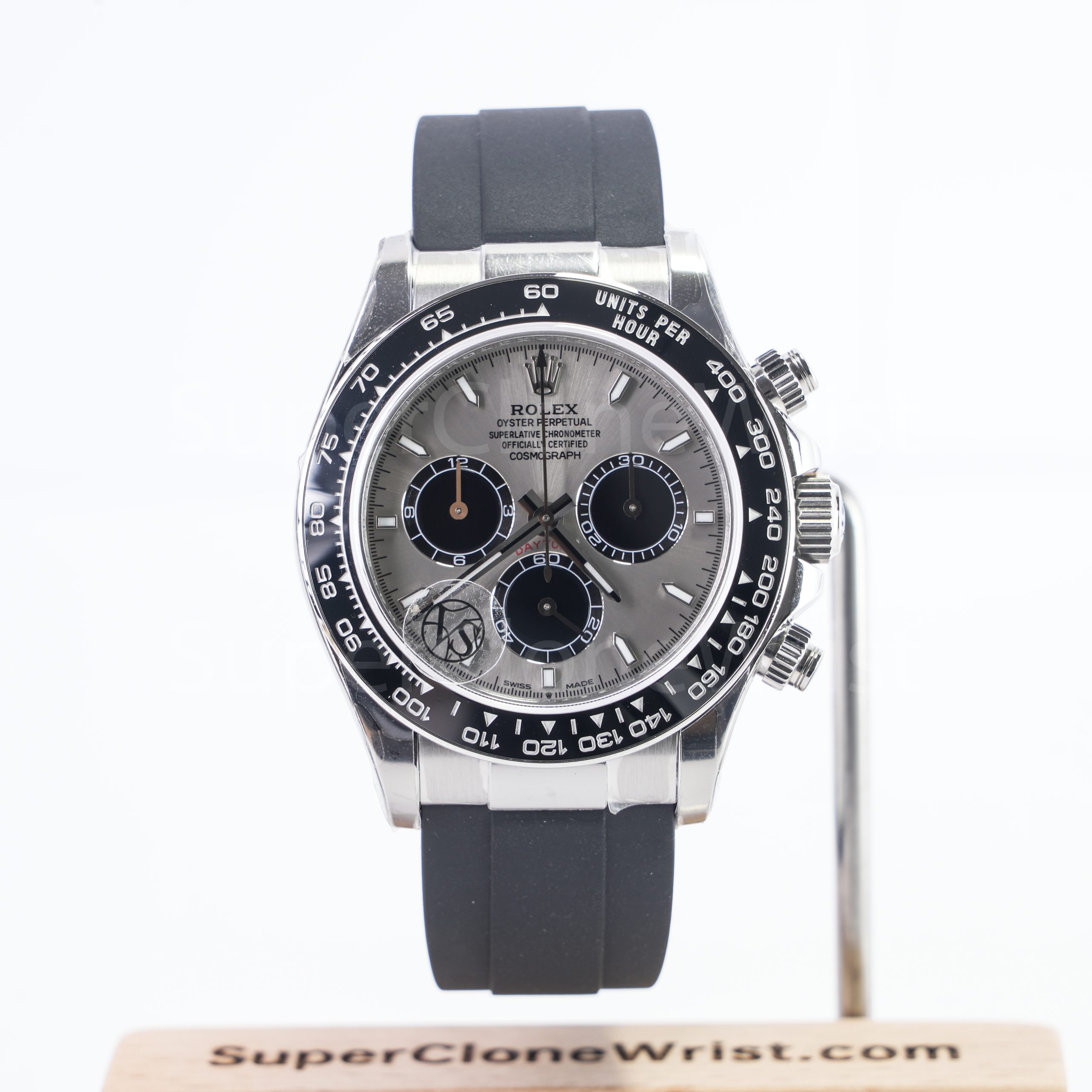
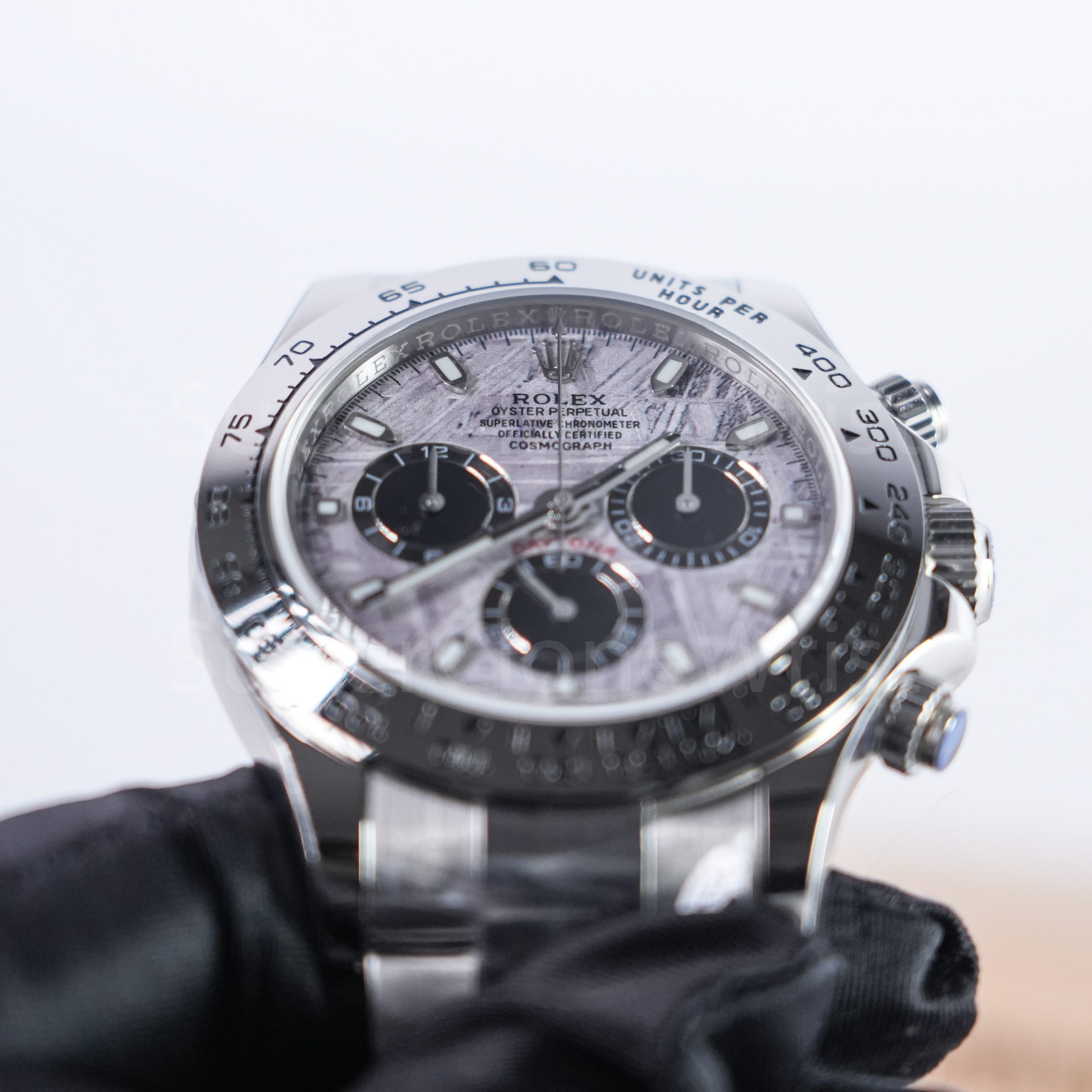
The two gallery images above come from current SuperCloneWrist Daytona product pages and illustrate the two bezel materials. They are not presented as exact 116500 and 116520 listings. Current photos of the requested reference, dial, bracelet, factory version, and allocated watch should be confirmed through WhatsApp.
Why ceramic looks smaller on the wrist
A dark bezel creates a clear stopping point around the dial. On a 6.25-inch wrist, that boundary makes the upper surface feel controlled even when the polished center links catch light. The watch looks compact from above, and the pushers become less dominant because the eye stays inside the black ring.
The effect is strongest with a black dial. Dial and bezel merge into one dark area, while silver subdial rings and markers provide the highlights. A white 116500 looks more noticeable, yet its black frame still keeps the case from appearing broad.
Why the steel bezel looks wider
With the 116520, the outer ring reflects the same room, window, and clothing as the case. There is no dark visual stop. Instead, the eye follows steel from bracelet to lug, across the tachymeter, and back down the other side.
That makes the watch feel broader without requiring a larger case. On a flat 7.25-inch wrist, the effect is balanced and confident. On a narrow, rounded wrist, a loose bracelet can make the case drift toward the hand and exaggerate the crown-and-pusher side.
Wrist circumference is only half the fit question
Two wrists can measure 6.75 inches and still wear the same watch differently. A broad, flat upper surface supports the case and keeps the lugs centered. A rounder wrist gives less stable contact, so bracelet sizing and the first-link angle matter more.
For a rounded wrist, the bracelet should sit close enough to prevent rotation but not so tight that the clasp presses during warm afternoons. A wrist shot taken after ten minutes of wear reveals more than a watch balanced loosely for one photo. Side views also show whether the caseback lifts the lugs away from the skin.
Fit notes below 6.5 inches
The 116500 is easier to recommend because the dark bezel keeps the watch visually contained. A black dial creates the smallest appearance, while the white dial adds more presence without changing the case.
A snug center position matters. When the case slides beyond the wrist bone, the screw-down pushers look larger and the crown side can touch the hand.
Fit notes above 7 inches
Both references remain refined rather than oversized. The 116520 gains an advantage when more visual width is welcome, since the steel bezel keeps the entire upper surface bright.
A white 116500 can create similar presence through dial contrast. Meanwhile, a black 116500 stays discreet and may feel intentionally compact on a larger wrist.
Thickness should be judged from the side, not a listing
Replica versions can differ by batch, crystal height, bezel lip, caseback profile, and movement construction. A small difference on paper may become obvious under a cuff. For that reason, a side-profile photo beside a ruler is more useful than an unsupported thickness claim.
The important visual line runs from crystal edge to bezel, then through the mid-case and caseback. A balanced watch looks compressed and deliberate. A tall crystal, bulky back, or thick bezel can make the same diameter feel top-heavy.
White dial or black dial changes the recommendation
The white 116500 is the most recognizable configuration in this comparison. Dark subdial surrounds and a black bezel form a strong panda layout that remains clear in a small wrist photo. It also works well with navy, gray, black, and cream clothing because the dial already carries its own contrast.
The black 116520 is the most interesting steel-bezel configuration. Its dark center prevents the watch from becoming one large silver surface, while the polished tachymeter gives the dial a bright outer edge. For a collection choice, that pairing has more personality than another black ceramic watch.
The white 116520 is quieter than the white 116500. Under overcast light, it becomes a silver-and-white object with less graphic separation. The black 116500 goes the other way: compact, modern, and dark enough to disappear under a jacket until the polished links catch light.
One reference handles ordinary contact with less fuss
Most wear does not come from dramatic impacts. It comes from a cuff brushing the case, a clasp resting near a laptop, a sleeve zipper touching the bracelet, or a watch pouch moving inside a carry-on. In those ordinary moments, the 116500 keeps its bezel looking clean more easily.
The steel ring on the 116520 reveals fine lines when light arrives from the side. Those marks may disappear from straight ahead and return beneath restaurant spotlights. That is not a defect. It is the normal visual behavior of polished metal, and it should be accepted before the reference becomes a frequent-wear piece.
Office use favors the ceramic bezel
At a desk, polished center links already provide enough shine. The 116500 balances them with a dark upper frame, so the watch remains sporty without looking restless. A gray knit, pale blue shirt, or charcoal overshirt works without much thought.
The 116520 looks more formal in the same setting. Its bezel catches ceiling panels, window light, and the bright edge of a laptop. That extra reflection can look elegant beneath a blazer, though it also makes small surface marks easier to notice at close range.
Dinner and smart-casual clothing give steel a clear role
Soft evening light is where the 116520 earns its place. The engraved bezel shifts between gray and silver as the wrist moves, while the bracelet mirrors glassware and warm interior light. A navy jacket, cream knit, dark trousers, and brown suede create a natural match.
The 116500 remains easy to wear, but its black ring keeps a stronger sports-watch identity. With a white dial, the contrast is visible across a table. With a black dial, the watch feels more restrained until the center links flash.
Casual weekends belong to the 116500
Denim, sneakers, bomber jackets, and plain T-shirts suit the black bezel without requiring a polished outfit. The design already shares visual language with modern dive and GMT watches, so it does not feel overdressed during errands or a relaxed lunch.
The 116520 can work with the same clothing, especially after the steel develops a few normal hairlines. When completely new and mirror-bright, it can feel dressier than the outfit. After regular rotation, the surface softens and the mismatch becomes smaller.
Weekly office rotation
116500. The bezel stays visually steady while polished bracelet links provide enough refinement.
Smart-casual dinners
116520. Steel reflections work well with tailoring, leather shoes, and warmer indoor light.
Frequent travel
116500. Light pouch contact is less likely to become an obvious bezel mark.
Black-bezel-heavy collection
116520. The all-steel outline prevents another watch from repeating the same dark frame.
Small phone photos
White 116500. Panda contrast remains readable even when the watch occupies little of the frame.
Quiet black dial
Black 116520. A dark center stays restrained while the metal bezel adds measured brightness.
Driving shows the bezel difference at its best
With both hands near the wheel, a Daytona sits at an angle that exposes the tachymeter ring. The 116500 looks graphic, almost like a black instrument surround. A modern cabin with dark trim, screens, and brushed accents supports that appearance.
The 116520 reflects the windshield, dashboard, and side window. In a cabin with tan leather or analog gauges, the steel ring feels more mechanical and less contemporary. The visual effect matters even when the chronograph never times a journey.
Travel favors clean packaging over a large box
A compact hard-shell case or padded single-watch pouch protects the case more effectively than loose decorative packaging. The bracelet should be secured so it cannot swing into the caseback, pushers, or bezel during transit. Protective film helps only when it sits flat and does not trap grit.
The 116500 tolerates ordinary lining contact better at the bezel. The 116520 needs more care because polished steel can reveal rubbing from an unexpectedly rough pouch. A soft internal divider between clasp and case is a small detail that prevents an obvious mark.
Summer fit needs room for a few millimeters of change
A bracelet that feels correct in an air-conditioned room can tighten after a walk, a salty meal, or a long flight. The wrist may change only a few millimeters, but the clasp can begin pressing into the underside of the arm. A practical fit allows slight movement without letting the case cross the wrist bone.
Clasp adjustment and removable links should appear clearly in photos. Exact bracelet construction varies by version, so no adjustment feature should be assumed from a reference name alone. A short bracelet video can show articulation, clasp closure, and whether the first links move freely.
Daily cleaning should stay simple
A clean microfiber cloth removes fingerprints from the crystal, bezel, and center links. Aggressive polishing is not useful. It can soften engraving on a steel bezel and alter the finish around polished and brushed transitions.
Water exposure should never rely on a printed rating or screw-down appearance. Pressure testing applies to the individual watch, and seal condition can change after service or impact. Without confirmed testing, dry cleaning is the sensible routine.
Daily wear versus collection use creates the clearest split
For daily wear, the daytona 116500 vs 116520 replica comparison points firmly toward ceramic. The watch keeps its defining feature cleaner, matches more casual clothing, and looks compact on a wider range of wrists. The white dial is the most versatile single choice.
For a collection, the answer changes. A steel-bezel 116520 adds a visual period and surface treatment that modern ceramic watches cannot provide. The black dial is especially useful when the watch box already includes bright white dials or panda chronographs.
The allocated watch matters more than the factory label
A familiar factory name can narrow the search, but it cannot confirm the condition of one watch. Batch changes, assembly, regulation, dial alignment, bezel printing, and bracelet fit still need review. The useful sequence is model first, current version second, individual QC third.
SuperCloneWrist’s QC photo process explains the role of photos and video before dispatch. For a Daytona, the review should go beyond one straight product shot because reflections can hide alignment, engraving depth, dust, and surface waviness.
Ask for a complete visual set, not more of the same angle
A useful set contains a neutral top-down photo, both case profiles, a low bezel angle, a clasp view, end-link close-ups, and a natural wrist shot. The hands should not cover key printing. A short moving-light video often reveals more than several compressed still images.
Resolution matters. Four sharp images can show more than twelve small thumbnails. The dial should be photographed without a heavy contrast filter, while the bezel needs one view under direct light and one under softer light.
- Confirm the exact reference request. State 116500 or 116520, white or black dial, steel bracelet, and the preferred factory or movement option when one has already been researched.
- Request current photos. Stock images help compare design, but the allocated watch needs its own top, side, clasp, bezel, and bracelet views.
- Review the visible structure. Check dial centering, marker alignment, subdial rings, bezel position, pusher symmetry, crown seating, and end-link gaps.
- Watch the functions. A video should show winding, hand setting, chronograph start, stop, and reset without unsupported promises about long-term performance.
- Confirm the fit information. Request bracelet length, removable links, available adjustment, and a wrist shot with circumference stated.
- Set packaging and shipping expectations. Confirm watch-only or full-set packaging, dispatch method, tracking process, and destination support through the official channel.
116500 bezel checks
The black ring should appear evenly colored rather than brown, cloudy, or plastic-like. Engraved numerals need consistent fill and depth around the complete scale. The triangle at 12 should sit in a convincing relationship with the dial marker below it.
A phone flashlight can reveal uneven fill, yet it can also create harsh glare. A better check combines one direct-light image with a slow video rotation. The bezel edge, crystal, and case should meet cleanly from the side without a bulky stacked appearance.
116520 bezel checks
Steel needs a different inspection. Engraving should remain crisp under side light, while filled markings should stay inside their cuts. Surface waviness often appears only when the watch turns slowly beneath one fixed lamp.
Polishing should look smooth without rounding the engraved edge. A deep handling scratch before dispatch is different from microscopic lines visible only at macro distance. The relevant standard is whether a mark dominates a normal wrist photo.
Dial and subdial alignment
White dials expose printing and dust. Black dials expose pale lint and marker alignment. In both cases, the coronet, minute track, applied markers, and subdial centers need to sit in a balanced relationship rather than looking shifted as a group.
The central chronograph hand should return to its intended zero position after a complete reset. Register hands should also settle correctly. A still image can show the final position, while a video confirms the sequence used to reach it.
Case profile, pushers, and crown
The case should look compact from the side. A tall crystal, thick rehaut, or bulky caseback can change the wrist presence even when the listed diameter sounds correct. Close views should show the transition from polished flanks to the upper lug surfaces.
Both screw-down pushers should sit evenly when secured. The crown should center between its guards and close without an obvious gap. Threads should never be forced during an inspection video, since rough operation can damage them.
Bracelet and clasp checks
The first links should articulate without sticking. End links should meet the case without wide gaps or sharp steps. A bracelet held horizontally can reveal unusual looseness, though a small amount of natural play should not be confused with poor construction.
The clasp needs a controlled closure and a flat safety lock. Link screw slots should look clean rather than chewed from hurried sizing. A video taken from the underside can show clasp action, adjustment points, and the way the bracelet curves.
Version recommendation should follow visible priorities
A version recommendation should explain what improves: case profile, bezel execution, crystal clarity, dial printing, bracelet fit, chronograph layout, movement access, or service practicality. A factory label by itself does not answer those questions. The current factory version guide is useful for structuring that comparison without treating one name as perfect for every reference.
For the 116500, money is most visible in the bezel, dial rings, case thickness, crystal, and bracelet integration. For the 116520, engraving depth, metal flatness, polished transitions, and a clean dial matter immediately. Decorative packaging should come after the watch passes those checks.
Movement questions should stay specific
The same case reference may appear with different movement solutions across versions and batches. The useful request is an exact movement designation, current function video, timing image when available, and service guidance. Broad labels such as “Swiss” or “1:1” do not replace those details.
Long-term performance cannot be proven by a photo. QC confirms visible condition and operation at that moment. A movement that starts, stops, and resets cleanly still needs sensible use, careful threading, and access to service if a later issue appears.
Weight should be measured, not promised
Weight can vary with movement, bracelet length, link count, and internal construction. A number copied from a different batch is not useful. A scale photo of the allocated watch, shown with the complete bracelet configuration, provides a better basis for comparison.
Balance also matters more than a single number. A heavy case on a loose bracelet can rotate and feel awkward, while a slightly lighter watch may sit more naturally. A wrist video from the side helps show where the mass sits.
Packaging and shipping should be confirmed before dispatch
The current shipping and delivery guide separates QC, packaging, dispatch, tracking, and local delivery into distinct stages. That separation matters because a tracking pause does not automatically reveal what is happening inside customs or a carrier handoff.
Before dispatch, confirm destination support, watch-only or full-set packaging, expected tracking process, and the contact route for an unusual delay. Delivery timing should be treated as an estimate influenced by route, carrier processing, customs, and local handoff rather than a guaranteed date.
Arrival inspection should happen before sizing
Open the parcel over a clean table and keep all packaging until the watch has been checked. Compare the dial, bezel, bracelet, clasp, and visible serial or reference details with the QC material. Photograph the unopened inner package and the watch as it appears on arrival.
Run the basic functions gently before removing links. Confirm winding, hand setting, chronograph start, stop, and reset. If anything differs materially from the approved QC set, record a clear video and contact the official support channel before attempting adjustment or repair.
The QC focus differs between these two references
In a daytona 116500 vs 116520 replica inspection, the ceramic model demands more attention to color, fill, alignment, and the relationship between bezel and dial. The steel model demands more attention to engraving, flatness, polish, and surface condition. Both require the same disciplined checks for dial centering, hand reset, case profile, bracelet fit, and clasp action.
This is why a generic “best factory” answer is not enough. The reference changes the visible risk. A version with excellent ceramic work may not automatically produce the best steel-bezel finish, and the reverse can also be true.
Select by use frequency first, then dial, then version
The cleanest decision starts with the weekly role. A watch worn four or five days each week benefits from a bezel that keeps its appearance with less attention. A watch worn twice a month can accept more reflective steel and visible hairlines in exchange for a more distinctive collection role.
That places the 116500 ahead for most practical situations. The white dial is the best single Daytona configuration because it stays legible, photographs clearly, and moves between casual and smart-casual clothing with little effort. A smaller or medium wrist also benefits from the black bezel’s compact visual effect.
The direct purchasing call
Choose a white-dial 116500 when one Daytona needs to carry the weekly rotation. It has the clearest identity, the easiest clothing range, and the least distracting bezel wear during ordinary use.
Choose a black-dial 116520 when the collection already contains modern ceramic sports watches. The dark dial controls the brightness, while the engraved steel ring adds the older all-metal character that makes the reference worth owning.
Do not select a version from stock photos alone. Current photos, wrist shots, bezel video, bracelet movement, exact movement information, weight on a scale, QC photos, packaging, and shipping details should belong to the same order discussion.
Which model fits each specific use case?
116500 fits these situations
- Frequent office and weekend wear
- Travel in a compact watch pouch
- Wrist sizes that benefit from a tighter visual frame
- Denim, knitwear, bombers, monochrome outfits, and sneakers
- Clear wrist photos and stronger white-dial contrast
- A first Daytona replica with one broad weekly role
116520 fits these situations
- A rotation that already includes black ceramic bezels
- Smart-casual dinners and tailored clothing
- Flat or larger wrists that welcome more visual width
- A preference for reflective steel and older-generation character
- Comfort with hairlines developing on polished surfaces
- A collection choice rather than the only sports chronograph
Three actions make the next step useful
- Send one exact request. Include reference, dial color, bracelet, wrist circumference, destination, and the main priority: appearance, movement, weight, or budget.
- Ask for matched evidence. Current photos, wrist shots, weight image, bracelet video, chronograph video, and QC photos should describe the same allocated watch.
- Confirm delivery details. Packaging type, shipping route, tracking process, and arrival inspection steps should be clear before dispatch.
Related Reading
Questions that still matter after the bezel choice
Does the 116500 wear smaller than the 116520?
It often looks smaller because the black bezel creates a clear boundary around the dial. The 116520’s bright steel ring continues the case surface outward, so the same general case format can appear broader.
Which reference is easier to maintain visually?
The 116500 is easier during ordinary wear because light rubbing is less obvious on its dark bezel. The 116520 shows hairlines sooner, especially under angled light, though those marks can create an attractive worn-steel character.
Which dial color works best with each bezel?
A white dial suits the 116500 because the black bezel and dark register surrounds create strong panda contrast. A black dial suits the 116520 because it balances the bright metal ring and keeps the watch from becoming one continuous silver surface.
What wrist size works with these Daytona references?
Both can work across many wrist sizes when the bracelet is sized correctly. Below about 6.5 inches, the 116500 usually looks more contained; on flatter or larger wrists, the 116520’s broader visual surface can feel well balanced.
What should a Daytona QC video show?
It should show the watch under moving light, both case sides, bracelet articulation, clasp closure, winding, hand setting, and chronograph start, stop, and reset. A natural wrist view helps confirm scale and how high the case sits.
Can a printed water-resistance figure be trusted?
No printed claim should replace pressure testing of the individual watch. Without confirmed testing and known seal condition, avoid swimming, showers, steam, and deliberate water exposure.
Should factory name or price decide the version?
Neither should decide alone. The relevant evidence is current execution: case profile, bezel quality, dial alignment, bracelet fit, movement option, function video, timing information when available, and the individual QC set.
What should be checked immediately after delivery?
Compare the watch with approved QC photos before sizing the bracelet. Check visible condition, dial and bezel alignment, clasp, winding, hand setting, and chronograph reset, while keeping the packaging and recording any material difference.
Compare the bracelet, bezel, and wrist fit before selecting a version
For the final daytona 116500 vs 116520 replica choice, request current photos, natural wrist shots, a measured weight comparison, bracelet video, chronograph function video, QC photos, version recommendation, packaging options, and current shipping details. A clear request with the preferred reference, dial color, wrist circumference, and destination makes the comparison more useful.